We’ve all been there: staring at a gel manicure that’s starting to chip, fighting the intense urge to just peel it right off. But peeling takes a layer of your natural nail with it, leaving them weak, brittle, and paper-thin.
If you want to remove your gel safely but don’t want to use harsh, drying acetone (or just realize you don’t have any in the bathroom cabinet), you still have some great at-home options.
Removing gel polish without acetone takes a little more patience and elbow grease, but your nail beds will thank you for the extra care!
A. Important: Hard Gel vs. Soft Gel
Before we dive in, it is important to know what kind of polish is actually on your nails.
Soft Gel (Soak-off gel): This is what most standard salons use for a regular gel manicure. It responds well to soaking and the DIY methods listed below.
Hard Gel (Builder gel or extensions): This type of gel is completely impermeable. It cannot be soaked off with water, oil, or even pure acetone. It must be filed off completely by a professional. If you have hard gel, these home methods will not work!
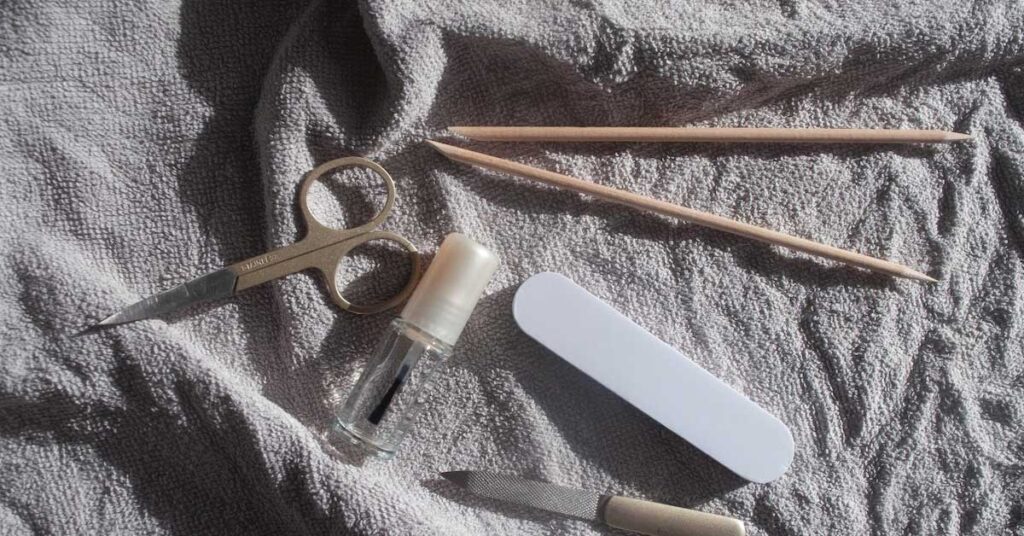
B. Gather Your Tools
Before your hands are wet or covered in oil, make sure you have everything you need within arm’s reach.
| Tool | Purpose |
| Medium-grit nail file | To break the hard topcoat seal. |
| Orange stick (aka orangewood stick) – wood pusher | To gently scrape away softened polish. |
| Small glass or ceramic bowl | For soaking mixtures (avoid plastic). |
| Cotton balls & aluminum foil | For wrapping and trapping heat. |
| Fine-grit buffer | To smooth the nail surface afterward. |
C. The Prep: Break the Seal First
No matter which method you choose below, you must start with this step. Gel polish has a hard topcoat that seals the color in and makes it water-resistant.
File it down: Take a medium-grit nail file and gently buff the shiny top layer off every single nail. You want the surface to look matte and slightly scuffed. Do not file all the way down to your natural nail. You just need to break that top seal so your removal ingredients can actually penetrate the polish.
Method 1: The Warm Soapy Salt Soak
This is one of the gentlest methods, using things you already have sitting in your kitchen.
1.Mix your soak: Fill a small bowl with very warm water (not hot enough to burn), a few squirts of dish soap, and a teaspoon of salt. The salt helps break down the polish bonds, while the soap helps lift it.
2.Soak it out :Submerge your nails completely and let them soak for 15 to 20 minutes. Put on a show or listen to a podcast while you wait!
3.Test the edges: Take your hands out and pat them dry. Use an orange stick (a wooden cuticle pusher) to gently nudge the edges of the polish. If it’s soft, it should start peeling or lifting away.
4.Repeat if needed: If the polish is still holding on tight, don’t force or scrape it. Put your hands back in the warm water for another 5 to 10 minutes.
Method 2: The Olive Oil Rescue
If your nails are naturally dry or prone to splitting, this method is incredibly nourishing. The oil works its way under the gel to weaken the adhesive bond while deeply moisturizing your skin.
1. Apply the oil: Rub a generous amount of olive oil (or dedicated cuticle oil, if you have it) all over your nails and cuticles.
2. Wrap them up: Soak cotton balls in a little more oil, place them on your nails, and wrap your fingertips tightly in aluminum foil or plastic food wrap to trap the body heat.
3. Wait it out: Leave the wraps on for 15 to 20 minutes.
4. Push it off: Remove the foil one finger at a time and use your orange stick to gently push the loosened gel away.
Method 3: The Vinegar and Lemon Combo
Vinegar is a fantastic natural solvent, and the acidity of lemon juice helps speed up the chemical breakdown of the polish.
1. Mix your soak. Mix equal parts white vinegar and lemon juice in a small bowl.
2. Wrap them up. Soak cotton balls in the mixture, place them on your buffed nails, and wrap them in aluminum foil or plastic wrap just like the oil method.
3. Soak it out. Let them sit for 10 to 15 minutes.
4. Push it off. Remove the wraps and gently scrape away the softened gel.
Method 4: Acetone-Free Polish Remover
If you want something a bit stronger than soap and water but still want to avoid pure acetone, check your bathroom cabinet for acetone-free polish remover. Most of these use ethyl acetate, a chemical that is gentler and less drying than acetone, but still acts as an effective solvent.
1. Soak cotton balls in the acetone-free remover.
2. Place them over your buffed nails and wrap tightly with aluminum foil.
3. Let them sit for 20 to 30 minutes (acetone-free removers take a bit longer to work on gel).
4. Remove the foil and push the softened gel off with your orange stick.
D. What NOT to Do
Patience is key when removing gel polish at home. Keep these rules in mind to protect your nails:
Do not use metal tools: Metal cuticle pushers are too rigid and can easily gouge the natural nail plate if you push too hard. Always stick to wood.
Do not skip the buffing: If the shiny topcoat is still intact, no amount of soaking will penetrate the color.
Do not rush the process: Pure acetone works fast; these alternative methods take time. Let the ingredients do the heavy lifting so you don’t end up damaging your nail beds.
E. Aftercare is Non-Negotiable
Because you skipped the acetone, your nails are already in much better shape than they would be otherwise. But the removal process and the scraping still puts stress on your nail beds.
Once all the gel is finally off, lightly buff the surface of your nails with a very fine-grit buffer just to smooth out any tiny leftover ridges.
Wash your hands, and then go heavy on the hydration. Massage a high-quality cuticle oil into your nail beds and follow up with a thick, rich hand cream to lock it all in. Read our article on how to heal your thin nails after gel manicure to learn more.